

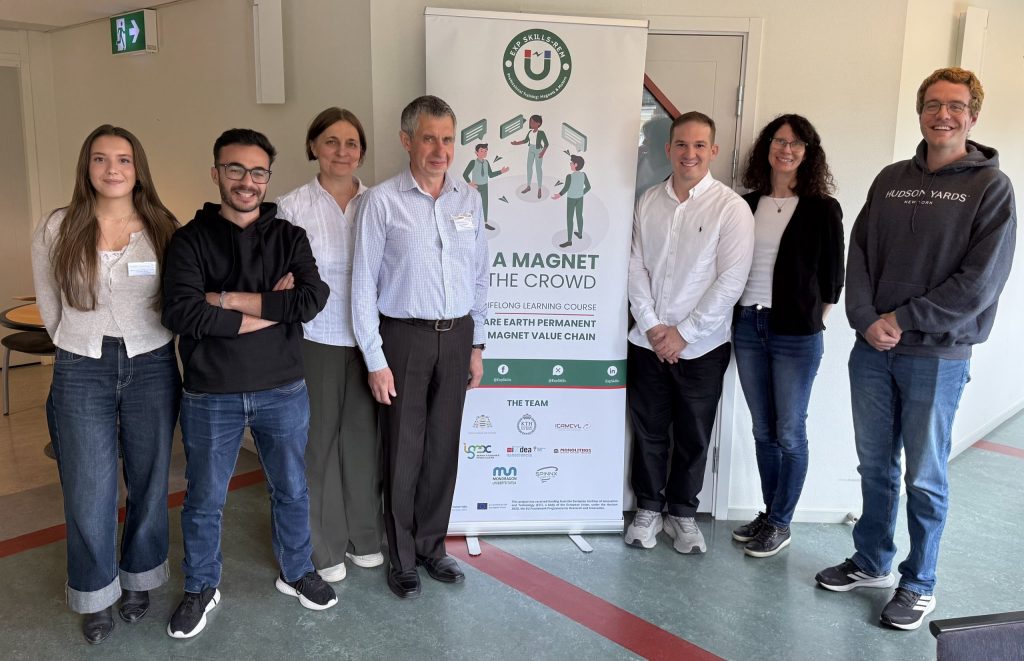
During June, Samarkand’s University Center hosted KTH International summer course The rare earth permanent magnet value chain. During four intensive days, doctoral students and researchers from Sweden, Italy and Spain gathered to deepen their knowledge of the value chain for permanent magnets of rare earth metals – an area of great importance for the green transition and the electrification of the future.
The course, which was carried out in collaboration with Industrialpartners, included lectures, discussions and study visits with a focus on everything from mining and materials technology to electric motors, recycling and sustainability.
The fact that KTH chooses to arrange an international course in Ludvika shows the strong competence and industrial environment that exists in the region. The combination of world-leading companies, research and education makes Ludvika a natural meeting place for future energy and materials technology.
The well-filled program looked like this:
June 15, kl. 8:15–13:00
Challenges and opportunities for the European rare earths industry. Introduction to magnetism.
June 16, at 8:15–15:00
Current and new production methods for permanent magnets based on rare earth metals.
June 17, at 8:15–15:00
Design and manufacture of magnet-based components and systems.
June 18, at 8:15–16:00
Recycling of permanent magnets based on rare earth metals. Life cycle analysis (LCA) of magnets and environmental impact.
Bonus: guided tour to local mining facilities, June 15 at 13:00.