

In an increasingly globalized business and labor market, intercultural competence becomes a key to success. Through the IKIGAI 2.0 project, Samarkand invests in knowledge-enhancing efforts in intercultural communication and understanding of cultural differences in working life.
Samarkand’s employee Mika Tejbo is frequently hired by Our owner and member companies. A couple of her efforts last week were workshops for Region Dalarna and Hitachi Energy.
Last week, Samarkand’s employees Mika Tejbo held several workshops for Region Dalarna and Hitachi Energy within the framework of the Ikigai 2.0 development project. The project aims to increase the intercultural competence of companies and organizations in Västerbergslagen – a key factor in remaining competitive in an increasingly globalized world.
The background to the project goes back to a working group called the Japan Group, which later developed into the international group and then IKIGAI 1.0. The current version, IKIGAI 2.0, functions as a platform for skills development and networking with a focus on strengthening understanding of international business relationships and cultures. This becomes particularly important in a region where several large employers, such as Hitachi Energy and Ovako, are currently owned by Japan and where suppliers meet new demands from global groups.
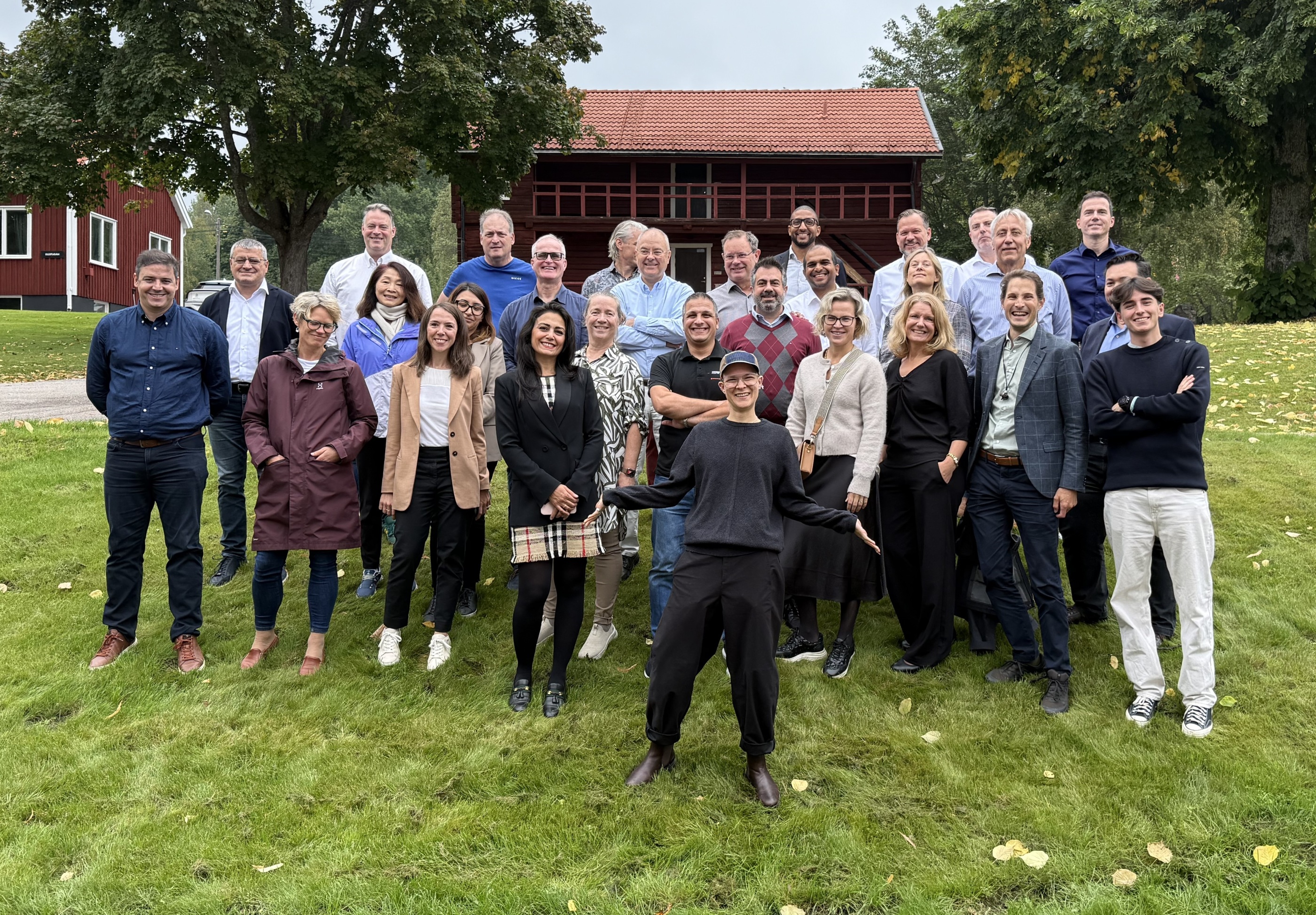
One of the highlights of the week was a lecture and workshop on September 11 at Brunnsvik’s conference room. An international management team, with 35 employees from Hitachi Energy, gathered in Ludvika before Strategy Days, under the leadership of Anna Thelenius, BID & Proposals Process and Transformation Lead.
The morning began with a presentation where Mika Tejbo highlighted cultural differences between countries such as China, Japan, India, the USA, Germany, France, Great Britain and the Nordic countries. The participants gained a deeper understanding of how different business cultures work and how these differences can affect both internal cooperation and relationships with customers.
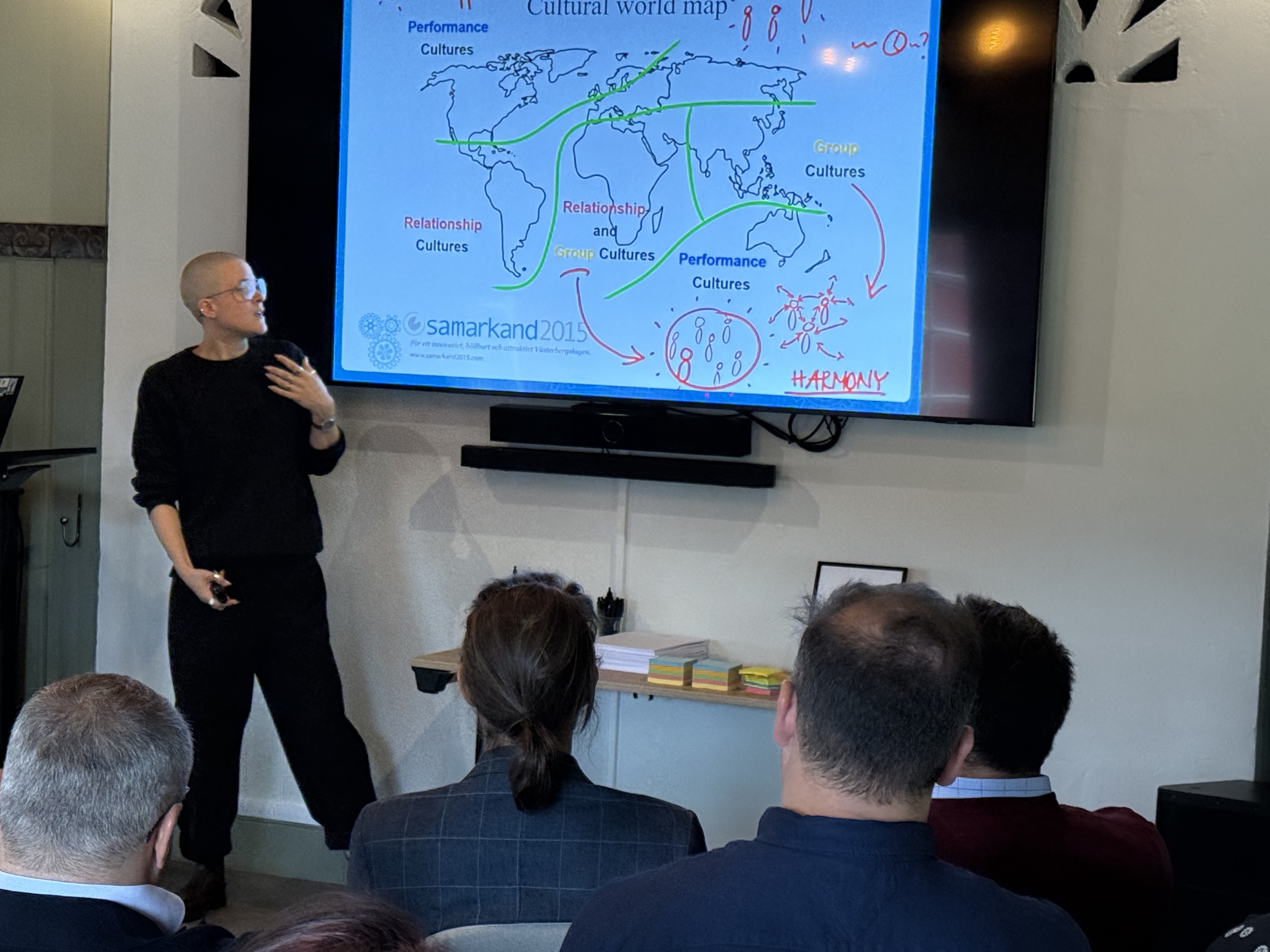
– I basically always start from intercultural communication, but the focus often lands on group dynamics and leadership in different work cultures, says Mika Tejbo.
After the presentation followed an interactive workshop, where the team worked practically with questions based on the Culture for Scale method. The focus was on identifying what can be improved in daily work, both internally within the organization and externally in the meeting with customers from different parts of the world.
– We see a growing need for knowledge about international relations, business and cultures in Västerbergslagen. With IKIGAI 2.0, we want to create a competence hub that gives companies and organizations the ability to meet the demands of the future on both a technical and business plan, says Mika Tejbo.
Through the Västerbergslagen Ikigai project, Samarkand, together with member companies and organizations, wants to build up a stronger joint competence. In this way, the region can continue to be an attractive partner and supplier in a global context – while the intercultural understanding contributes to increased innovation and sustainable development.