Electric vehicles, solar panel installations, air conditioners, and heat pumps are some examples of systems that could potentially be used in cyberattacks to disrupt the power grid.
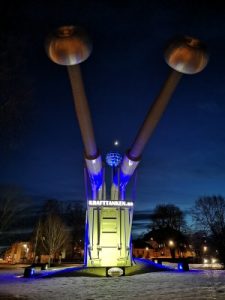
Krafttanken’s island-mode system will now be used for research purposes to help increase knowledge and contribute to safer and more robust electric power systems. The Swedish Energy Agency has granted funding to RISE and Samarkand2015 for a three-year project in which the expertise of High Voltage Valley will collaborate.
Energy dependence is increasing, and new energy sources such as wind and solar power do not provide electricity production that is as predictable as earlier solutions, which requires more flexible systems. Connected user control is also increasing. All of this creates cyber risks. The threat posed by cyber risks has become more tangible as the security policy situation has deteriorated significantly. Preparedness efforts have previously focused more on electricity production and distribution networks. Electricity users have not received the same level of attention, even though flexible new solutions tend to be implemented close to end users.
Previous international studies have shown that cyberattacks originating from the user side can cause disruptions in parts of national power grids. Energy islands, created to ensure security of supply—such as the island operation in Krafttanken—can be seen as a miniature version of the entire power system and are therefore well suited for studying the consequences of cyber threats.
The Swedish Energy Agency has now granted funding to RISE Research Institutes of Sweden and Samarkand2015 for the implementation of the project “COLA; Cyber risks caused by a flexible electricity market and how to address them: A case study of island operation” during the period 1 November 2023 – 31 October 2026.
The purpose of the project is to contribute to a more robust electric power system that is safer for citizens and less vulnerable in terms of electricity supply. The overall objective is to increase knowledge and understanding among grid owners, the energy sector, municipalities, companies, and private individuals regarding vulnerabilities and risks associated with connected, distributed consumption and production units. The project also aims to contribute to the academic knowledge base within this field.
The Swedish Energy Agency’s justification for the decision:
The Swedish Energy Agency assesses that the project can contribute to a better understanding of cybersecurity related to connected components for electricity consumption and local electricity production within a defined power grid. This has the potential to improve security of supply in the electricity system from both safety and delivery perspectives and is therefore in line with the purpose of the call. The project is also considered to have clearly defined stakeholders with identified needs and a concrete plan for knowledge dissemination, which increases the project’s potential for practical application. Furthermore, the application includes clearly described work packages and activities, strengthening the project’s feasibility.
More information about Krafttanken’s island-mode function: Krafttanken.se
For contact:
Rise:
Jenny Holgersson, jenny.holgersson@ri.se
Sara Skärhem, sara.skarhem@ri.se
Samarkand2015 / High Voltage Valley:
Lars Lindblom, lars.lindblom@samarkand2015.com